 +91 99853 00038


 Admission
 Pay Fee
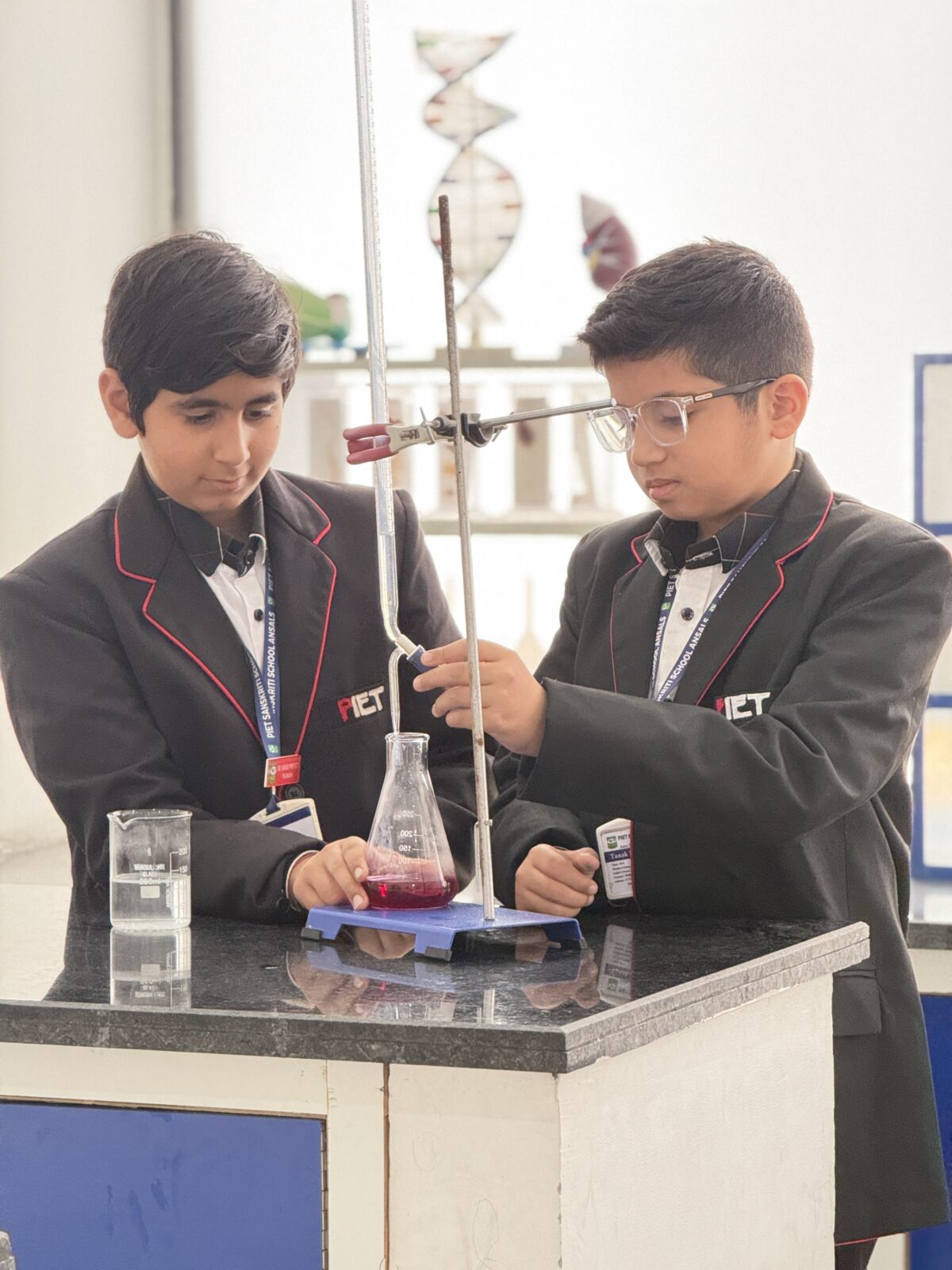
When parents come to see us, one of the first things many of them ask about is the labs, and usually the question behind it is whether a smart class school in Panipat actually uses all that equipment or just shows it in brochures. So we thought we’d put the answer down here properly, the same way we’d explain it if you were sitting with us in the admission office in Block E, Ansals Sushant City.
How our smart classes work?
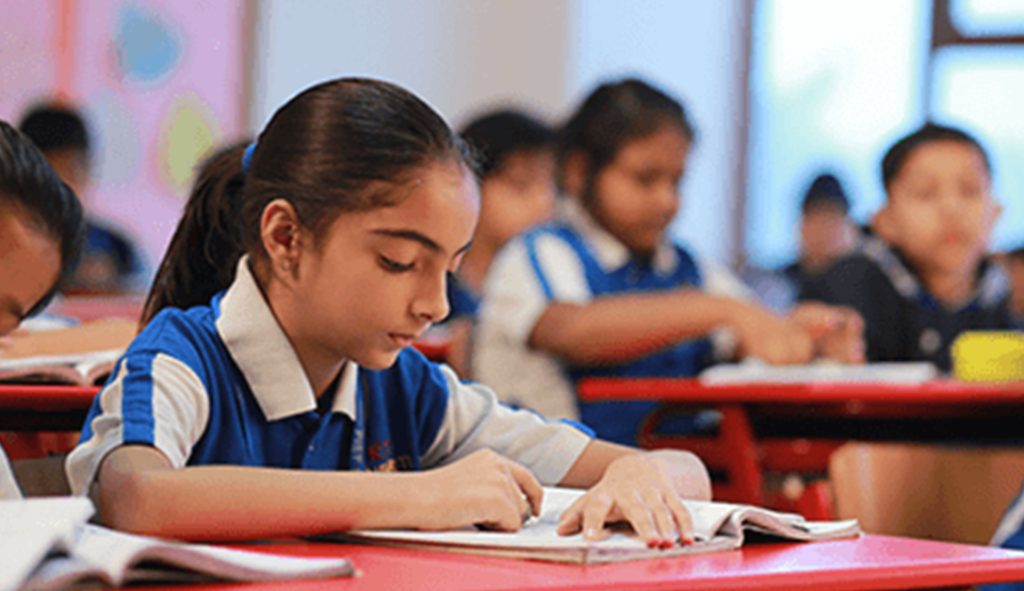
Honestly, a smart board on its own doesn’t teach anything; the teacher does. What the board gives our teachers is a way to show children the things that are hard to draw with chalk. When a Class 4 EVS teacher is explaining the water cycle, for example, she can play a short animation, stop it right when the cloud forms and ask the class what they think will happen next, and after that the desks get pulled together so the children can make their own diagram in groups. The rooms have movable seating for exactly this reason.
Notebooks and handwriting practice continue as before, because we think children still need both. Our smart classrooms just add one more way of explaining, and with roughly 655 children in Class 1 to 5 and about one teacher for every 15 students, the teacher usually has time to go back over a point for the child who missed it.
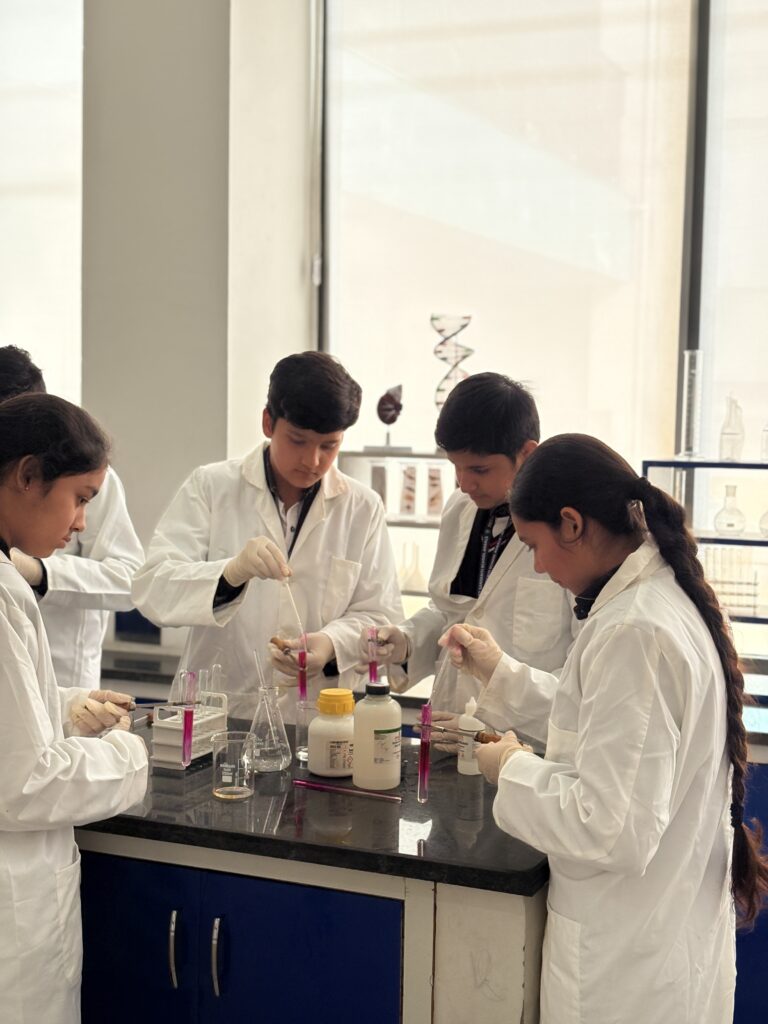
What happens in the science lab?
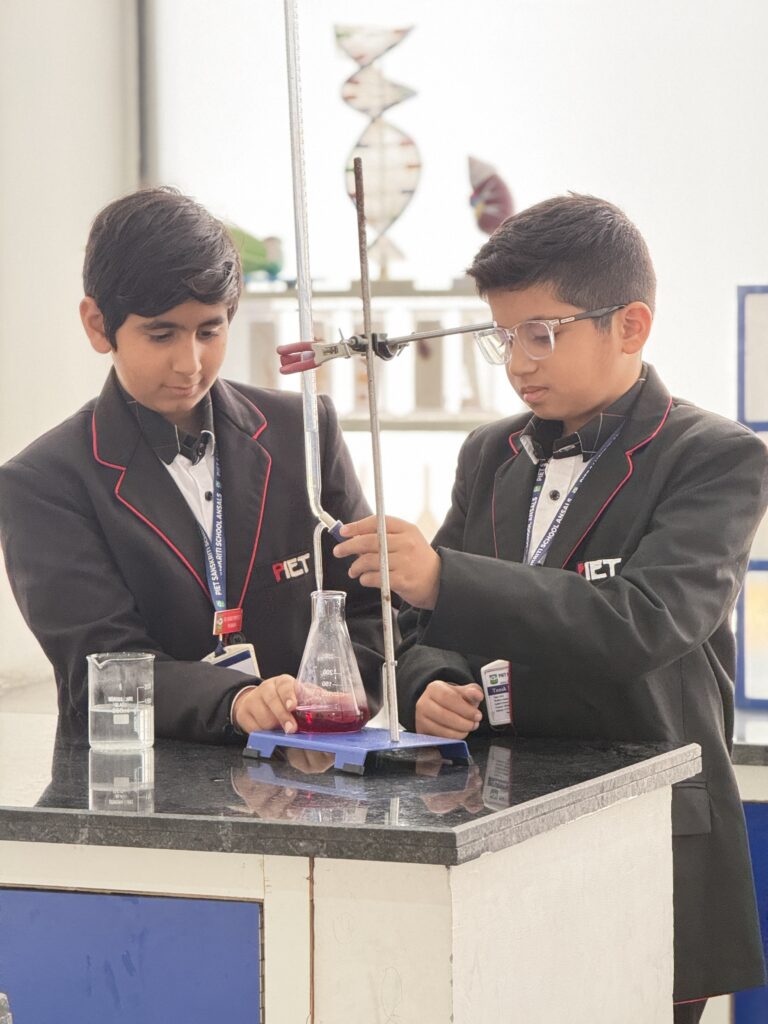
Most of us remember very little of what we read in a science textbook at school, but we remember the day the iron filings jumped onto the magnet. That’s really the whole idea behind our science labs.
In the senior classes, students do the practicals from the CBSE list for their class, so a Class 9 student will prepare an onion peel slide and look at it under the microscope, and Class 10 students test the pH of common things from home and the kitchen. Since practical work is part of internal assessment in Class 9 and 10, these lab periods count towards board results as well. A teacher stays in the lab for every period, the safety rules are displayed on the wall, and children go through them before they’re allowed near any apparatus.
If you’re shortlisting a CBSE school with a science lab in Panipat, please do ask us to show you a lab period when you visit. We’ll try to time your visit so one is going on.
Computer classes from Class 1!
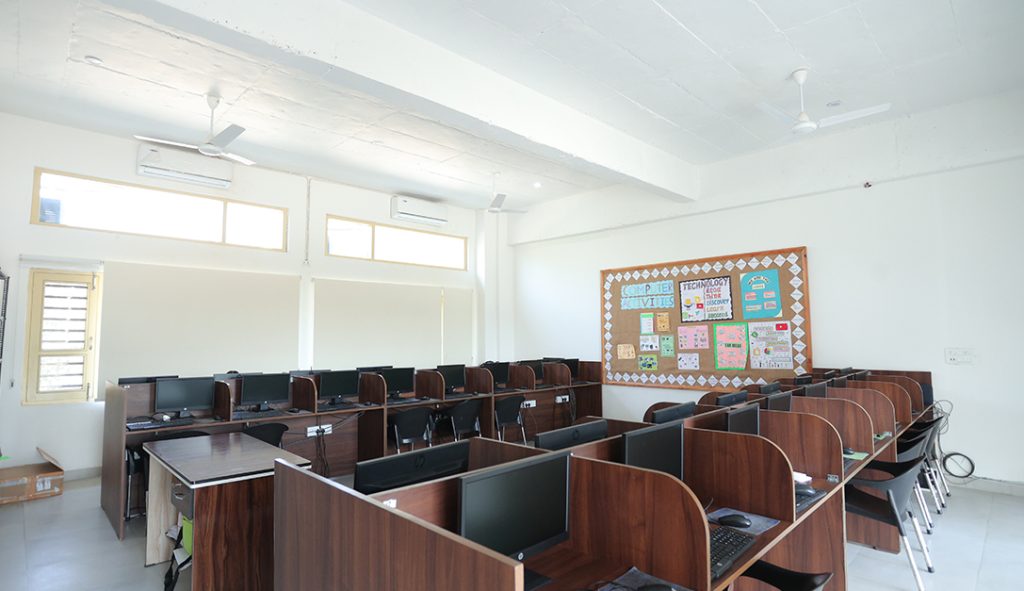
At our Primary School, computer is taught as a proper subject along with English, Hindi, Maths and EVS, so children start in Class 1 itself, mostly with handling the mouse and keyboard and making simple drawings, and by the time they reach Class 5 most of them can type a short paragraph on their own. In middle school they learn office software and a good amount about online safety, like why a password should never be shared and how to tell when a website isn’t genuine.
Coding starts seriously in Class 6, which is also what NEP 2020 recommends. Students first learn on CoderZ, where they program a robot on screen using blocks, and then move to building real robots in our Robotics & 3D Lab. Some of our students also took part in the India AI Impact Festival in 2024, which CBSE organised along with Intel India.
A lot of parents looking for a school with a computer lab in Panipat also worry about screen time, which is understandable. Computer use here happens in lab periods with the teacher present, and children aren’t given tablets to use all day.
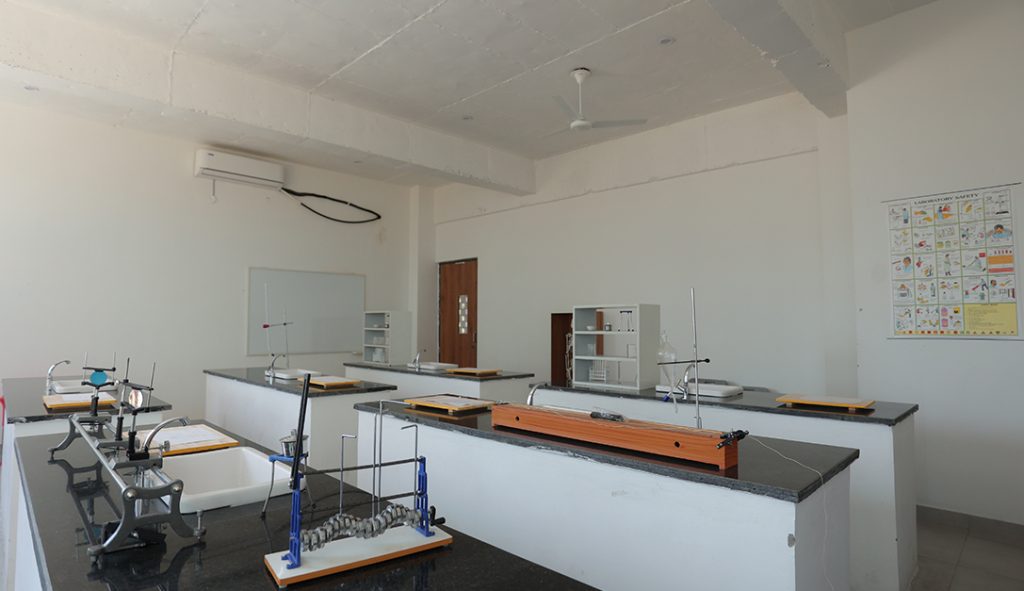
See the campus online first!
If you’d like a look before coming over, our 360 degree campus tour lets you go through the classrooms, labs and library on your phone, and the rest of our facilities are listed on the Infrastructure page.
Questions parents ask us!
1. Is PIET Sanskriti Ansals a smart class school in Panipat?
Yes, all our primary classrooms have interactive smart boards, and teachers use them along with the regular board and notebooks.
2. Is the science lab only for senior classes?
The CBSE practicals are mainly done in the senior classes, though younger children also visit the lab for simple activities with their teachers.
3. From which class does my child get computer classes?
From Class 1. Coding is added from Class 6 onwards.
4. Who supervises children in the labs?
A teacher is with them for the whole period, every time, and lab rules are taught before anyone touches the equipment.
5. Can we visit the labs before admission?
Yes, you’re most welcome. Just tell us when you book your visit that you want to see the labs, and bring your child along if you like.
Explore more at PIET Sanskriti
Come and visit us!
You can book a campus visit, call us on 99853 00038 or contact us online. We’re at EPNS-01, Block E, Ansals Sushant City, Panipat, Haryana 132103, and admissions for 2027-28 are now open.
